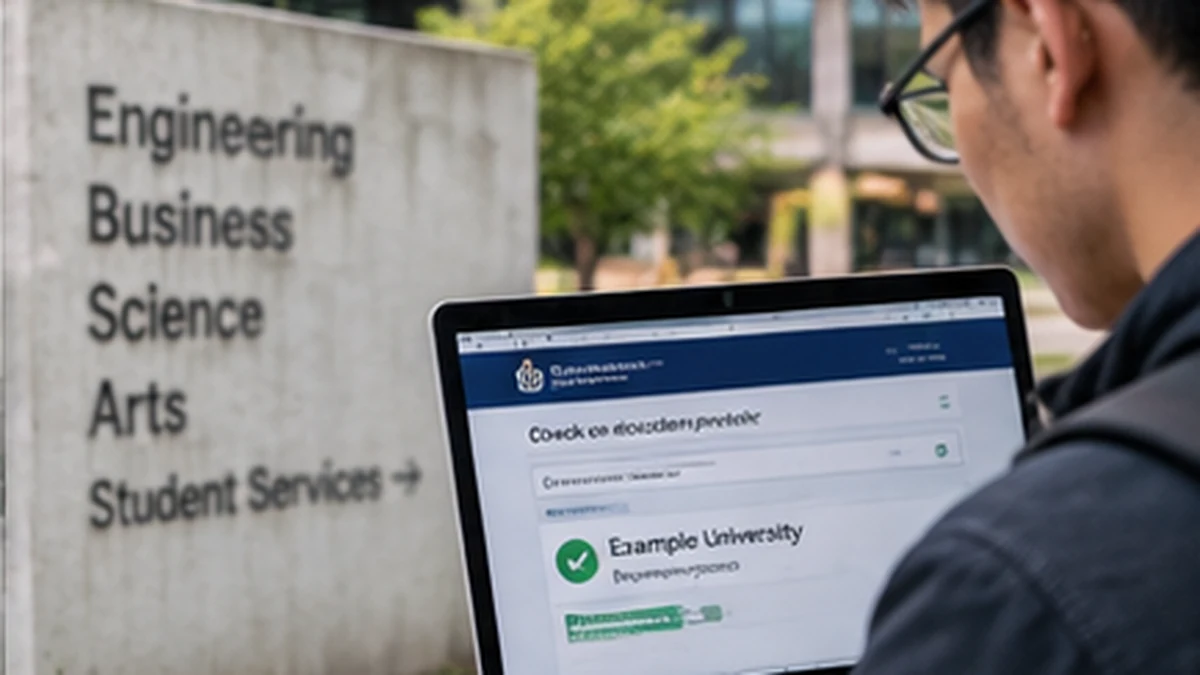
Verify an education provider Education scams can imitate real universities, training centers, scholarship offices and online academies. A professional website, impressive campus photo or familiar-sounding name does not prove that the provider is legitimate or that its credential will be recognized.
This guide is designed to help learners make careful education decisions using evidence, official sources and realistic planning. Education systems differ by country and institution, so local rules, recognition and policies should always be checked through the appropriate authority. In this verify an education provider guide, apply the principle to the exact provider, program and country you are considering.
Verify an education provider using official records
Check the national education ministry, regulator, accreditor, licensing authority or recognized institution database for the provider’s legal status. For higher education, WHED and national competent authorities can help confirm recognition.
After this section, write one sentence describing what you know and one describing what still needs verification. This keeps verify an education provider grounded in evidence instead of assumptions.
For a stronger decision, compare at least two pieces of evidence related to verify an education provider using official records: one from the provider or program itself and one from an independent or official source. The comparison helps you see where marketing language ends and verifiable information begins.
Check the exact program and awarding body
Confirm the exact program, campus, online delivery mode and organization issuing the final credential. Scammers and weak providers sometimes borrow the name of a legitimate institution or partner without authorization.
Use this section as a checkpoint: if the answer would change your choice, cost, eligibility or safety, verify it before moving forward with verify an education provider.
For a stronger decision, compare at least two pieces of evidence related to check the exact program and awarding body: one from the provider or program itself and one from an independent or official source. The comparison helps you see where marketing language ends and verifiable information begins.
Confirm identity, contacts and payment details
Check the official domain, physical address where relevant, published phone numbers, staff contacts and legal business details. Pay through the institution’s official channel or verified bank account.
Keep a short note of the source, date checked and any condition attached to the information. Education decisions often unfold over weeks, and details can be forgotten.
For a stronger decision, compare at least two pieces of evidence related to confirm identity, contacts and payment details: one from the provider or program itself and one from an independent or official source. The comparison helps you see where marketing language ends and verifiable information begins.
Read tuition, deposit and refund terms before paying
Understand the total amount, payment schedule, cancellation policy and what happens if admission, enrollment or course delivery does not proceed as expected. Keep a copy of the terms.
If the answer is unclear, ask the institution or competent authority a focused question rather than filling the gap with guesswork. That small habit improves verify an education provider quality.
For a stronger decision, compare at least two pieces of evidence related to read tuition, deposit and refund terms before paying: one from the provider or program itself and one from an independent or official source. The comparison helps you see where marketing language ends and verifiable information begins.
Question unrealistic promises and weak academic detail
Guaranteed degrees in extremely short periods, guaranteed jobs, or credentials based only on life experience are major warning signs. A real provider should explain curriculum, instructors, assessment, policies and support clearly.
Decide whether this point is mandatory, optional or simply useful. Separating those categories prevents verify an education provider from becoming overloaded with low-priority details.
For a stronger decision, compare at least two pieces of evidence related to question unrealistic promises and weak academic detail: one from the provider or program itself and one from an independent or official source. The comparison helps you see where marketing language ends and verifiable information begins.
A realistic education example
A prospective student is contacted by an online “university” offering a fast degree based mostly on work experience. The website looks professional, but the provider cannot be found in the national higher-education registry and asks for full payment through a personal account. The student stops the transaction and chooses to verify other institutions through official sources before paying.
The lesson is not that every learner should make the same choice. It shows how verify an education provider becomes more reliable when the student compares recognition, learning quality, cost, support and practical fit before making an irreversible commitment.
Connect this decision to the rest of your education plan
Use verify accreditation and recognition through official sources when that becomes the next question, and review review the full education cost before making a payment when you need to strengthen another part of the decision.
Education planning works best as a sequence. Resolve the highest-risk question first, then move to the next decision instead of trying to optimize every part of verify an education provider at once.
Common mistakes with verify an education provider
- Trusting a professional website without checking official records.
- Paying before reading refund terms.
- Sending money to personal or unrelated accounts.
- Accepting guaranteed job or degree promises.
- Sharing identity documents before verifying the provider.
These mistakes are common because education decisions mix hope, urgency, money and long-term goals. Slowing the process enough to verify each important claim can prevent expensive corrections later.
A seven-day action plan for verify an education provider
Day 1: define the outcome and gather the information you already have. Day 2: verify official recognition or provider status where relevant. Day 3: compare curriculum, format or requirements. Day 4: calculate cost and time. Day 5: check support, policies or transfer rules. Day 6: identify risks and unanswered questions. Day 7: review the evidence and decide whether to proceed, pause or compare another option. In this verify an education provider guide, apply the principle to the exact provider, program and country you are considering.
This schedule is only a framework. Some education decisions need more time because institutions respond slowly, transfer evaluations take weeks, or financial plans require family discussion. The purpose is to organize verify an education provider, not rush it.
Practical checklist
- Provider found in official records
- Exact program verified
- Awarding body checked
- Contact details confirmed
- Refund rules saved
- Payment channel verified
- Unrealistic promises rejected
- Verification records stored
Use the checklist to reveal missing information, not to force a quick yes-or-no answer. A strong verify an education provider decision is one where the remaining uncertainty is visible and acceptable.
Verify before sharing sensitive documents too
Education providers may request identity documents, transcripts, financial records, passport copies, or previous certificates during admissions. Confirm the provider before sending sensitive information, not only before paying money.
Use secure official portals where possible and understand why each document is required. Fraud risk is not limited to tuition payments; stolen education and identity records can also be misused.
Check whether promises appear in official written terms
Sales staff may describe job placement, internships, transfer agreements, scholarships, or refund conditions verbally. Ask where those promises appear in the official program documents or contract.
If an important benefit exists only in conversation and cannot be confirmed in writing, treat it as uncertain when making your decision.
Know how to respond when verification fails
If the provider cannot be verified, stop payments and document the information you found. If you already paid, contact the payment provider quickly, keep receipts and communications, and use the appropriate consumer-protection or fraud-reporting channel.
Do not continue sending money because you fear losing what you already paid. Additional payment rarely turns an unverified provider into a legitimate one.
Frequently Asked Questions
Does a .edu address prove a school is legitimate?
No. Domain names alone are not enough. Check the institution through official recognition or regulatory sources.
What is a diploma mill?
A diploma mill sells credentials with little or no genuine academic work and may falsely claim recognition or accreditation.
Should I pay a deposit before verifying accreditation?
If recognition matters to your goal, verify it before paying a non-refundable amount.
What if an agent says the institution is recognized but I cannot verify it?
Ask for the exact official authority or registry and verify independently. Do not rely on screenshots or verbal assurances.
Questions to ask before you make the final decision
Before you commit, write down the three questions that could still change your decision about verify an education provider. One question should be about quality or recognition, one about cost or time, and one about what happens after completion. This simple exercise stops minor details from crowding out the questions that could genuinely change the value of the education choice.
When you ask an institution or provider a question, look for a specific answer rather than reassurance. Names, policies, dates, official links, written conditions, and examples are more useful than phrases such as “don’t worry” or “everyone accepts this.” Keep important answers with your application or enrollment records so the decision remains traceable later. For How to Verify an Education Provider Before Paying Fees, keep this review tied to the specific institution, learning format, and outcome you selected.
How to document your research
Create one private folder for How to Verify an Education Provider Before Paying Fees. Save the official program page, recognition or registry result, fee schedule, curriculum, support information, important emails, refund rules, and any comparison notes. Add the date beside information that may change. A clean research file helps you avoid repeating the same searches and makes it easier to explain why you chose the program.
Documentation is particularly useful when the decision takes several months. Tuition may change, staff may leave, pages may be updated, or your own priorities may shift. Keeping the original evidence does not mean you should ignore newer information; it gives you a reliable baseline for comparing what changed and deciding whether the change matters. For How to Verify an Education Provider Before Paying Fees, keep this review tied to the specific institution, learning format, and outcome you selected.
Review the decision after you start
Enrollment is not the end of verify an education provider. During the first meaningful stage of the program, compare the real experience with the evidence you used before enrolling. Check teaching quality, workload, access to support, unexpected costs, assessment, communication, and whether the program is building the knowledge or evidence you expected.
If something is different, identify whether it is a normal adjustment problem or a structural issue. New students often need time to adapt to pace and expectations, but unrecognized credentials, hidden fees, unavailable support, or major differences between the advertised and delivered program deserve a more serious response. A review habit helps you act on problems while options may still be open. For How to Verify an Education Provider Before Paying Fees, keep this review tied to the specific institution, learning format, and outcome you selected.
Authoritative resource to review
For an authoritative reference related to this topic, review Federal Trade Commission – Education and Training. Education systems differ by country, so use the official national authority, institution or regulator when a local recognition or legal question matters.
Final perspective
Verify an education provider becomes easier when the decision is built from verified information rather than urgency or marketing. Compare the evidence, protect your money and personal information, and keep a record of the sources that shaped your choice.
Leave a Reply